
Specialized Storage and Services for Fine Art, Design, Collectibles and Furniture


As baseball season nears its playoff crescendo, football is kicking off, the NBA gears up for preseason, and the NHL readies for faceoff, collectors across the country are once again reminded of the powerful role sports play in culture—and the equally powerful value tied to sports memorabilia. From rookie trading cards to game-worn jerseys, collectors are not just preserving objects; they’re safeguarding history.
But behind every prized piece lies a crucial question: how do you protect, preserve, and insure these items so their legacy endures? We spoke with leaders in the field: James Smith of Freeman’s | Hindman auction house and Matthew Cluxton of The Cincinnati Insurance Company—to explore the most important considerations for collectors today.
Sports memorabilia spans diverse materials: paper trading cards, leather gloves, and fabric jerseys—all of which are vulnerable to damage from light, temperature fluctuations, and humidity.
The required environment for storing paper, fabric and leather is no different than that required for fine art, photography, and other collectibles. Our climate-controlled facilities (68-72°F, 50-55% relative humidity) follow museum standards for temperature and humidity—the best known levels for preservation.
Yet, many collectors begin at home. Often items are stored on bookshelves, in closets, or in attics and basements. Those environments are prone to heat, moisture, and pests, which can lead to warping, cracking, mold growth, or fading. Archival containers and proper cataloging are critical, but professional facilities add the privacy, discretion, and security most home settings lack.
For auction houses, value hinges on condition—and proof. “Provenance and documentation play a huge role in value. In fact, the story behind an item—the who, when, and how—can be just as important as the piece itself” says James Smith. “Take a jersey, for example: if you can show it’s tied to a specific game or player appearance, it’s going to bring in a lot more at auction. Without that proof, even genuine items can lose a big chunk of their potential, since buyers are hesitant to pay top dollar without a solid, documented backstory.”
Smith cautions against relying on generic certificates of authenticity, recommending instead letters from respected third-party companies like PSA, Beckett Authentication Services, or JSA. Collectors should also keep receipts, appraisal records, and photos. “When it comes time to sell, having that paper trail not only makes buyers more comfortable but can directly translate to higher prices at auction, as items coming from a knowledgeable collector have more credibility in the marketplace.”
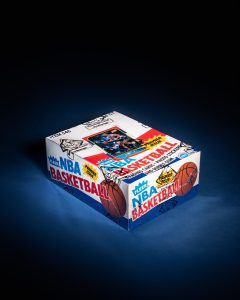
Even with proper storage and documentation, unexpected risks loom. “Many collectors assume their homeowners policy covers their items under its contents coverage, but standard policies include limitations for collectibles such as sports memorabilia,” explains Matthew Cluxton. “From a claims frequency standpoint, the most common cause of loss we encounter when it comes to sports memorabilia is environmental damage. Usually, we see: water damage from flooded basements where items were being stored in boxes on the floor instead of having it elevated; temperature or humidity fluctuations for a prolonged period of time which leads to warping, cracking and mold growth; improper handling and storage.”
Specialized collectibles insurance can address those gaps, offering coverage for transit, theft, mysterious disappearance, and agreed value settlement—sometimes even with a 150% appreciation clause to account for rapid market growth. “Imagine you have purchased a game-worn jersey at auction for $10,000. Three years later you experience a loss, and that same jersey is now worth $15,000. With this market appreciation clause, the insurance company could pay you $15,000 even though the item was scheduled on the policy for $10,000.”
So when should collectors move from home storage to professional support? Experts agree the warning signs are clear: when a collection outgrows the closet, when pieces are stored in attics or basements, or when their combined value reaches a point where a loss would be devastating.
Smith offers clear guidance on when to make the transition: “If your collection starts to get too big to manage, stacked up in storage tubs and not displayed where you can enjoy it then using a professional storage facility—climate-controlled and well-guarded—might be the best option.”
Key steps every collector should take:
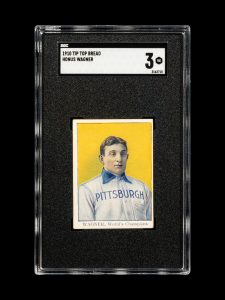
For those who do choose professional storage, the handling protocols matter as much as the environment. At Fortress, COO Tom Burns emphasizes the importance of proper technique: “It’s very important to always wear the proper gloves when handling this type of memorabilia to preserve the material which is usually vintage. Experienced art handlers know all the right ways to handle a piece and the right place to lift depending on the type of item, whether a card, photograph, glove, ball, jersey or helmet.”
The facility’s approach reflects the specialized nature of sports collections: “Fortress offers primarily private vaults at its facilities, which is the first step in ensuring privacy, discretion, and security for these types of significant objects,” Burns explains.
At the heart of every collection is a story—a favorite team, a legendary game, or a connection passed down through generations. By pairing expert storage, authentication, and insurance, collectors not only protect their investments but also preserve the memories, history, and meaning behind every piece.
The internet may have made rare discoveries less frequent, but the joy of revealing a hidden gem—or protecting one for the future—remains as powerful as ever.
__________________

Mr. Smith joined Freeman’s | Hindman in 2018 and has been personally active in the sports memorabilia industry for four decades, bringing an extensive knowledge base across all sports and sports-related collecting categories. Among the highlights of Mr. Smith’s career was presenting the collection of Chicago Bears Hall of Fame coach and player Mike Ditka at auction. He regularly attends sports memorabilia conventions throughout the country to gauge the latest demands. Prior to joining Freeman’s | Hindman, Mr. Smith enjoyed an award-winning career in journalism, creating memorable newspaper covers and sports pages as Page One Editor at the Chicago Sun-Times.
Freeman’s | Hindman is a premier American auction house offering services in multiple categories including fine art, jewelry, design, books and manuscripts, furniture, decorative arts, antiquities, couture, and Asian works of art. With 16 regional locations nationwide, the firm provides auctions, appraisals, private sales, and art advisory services, connecting clients to the global art market. Freeman’s | Hindman strives to bring art, history, and design to life by connecting people with extraordinary objects through exceptional service and expertise.

Matthew Cluxton is The Cincinnati Insurance Company’s director of fine art and collectibles insurance for Personal Lines. His insurance experience and career with Cincinnati has exclusively focused on fine art and collectibles protection. He received his Bachelor of Fine Arts in art history from Ohio University and holds the Applied Jewelry Professional designation from the Gemological Institute of America. He is a former licensed property casualty agent and is involved with nationwide, art-specific, insurance committees.
The Cincinnati Insurance Company stands among the nation’s top 25 property casualty insurer groups. Select independent agencies offer our standard market and excess and surplus commercial lines and personal lines policies in 46 states. Within this select group, we also seek to become the life insurance carrier of choice.
